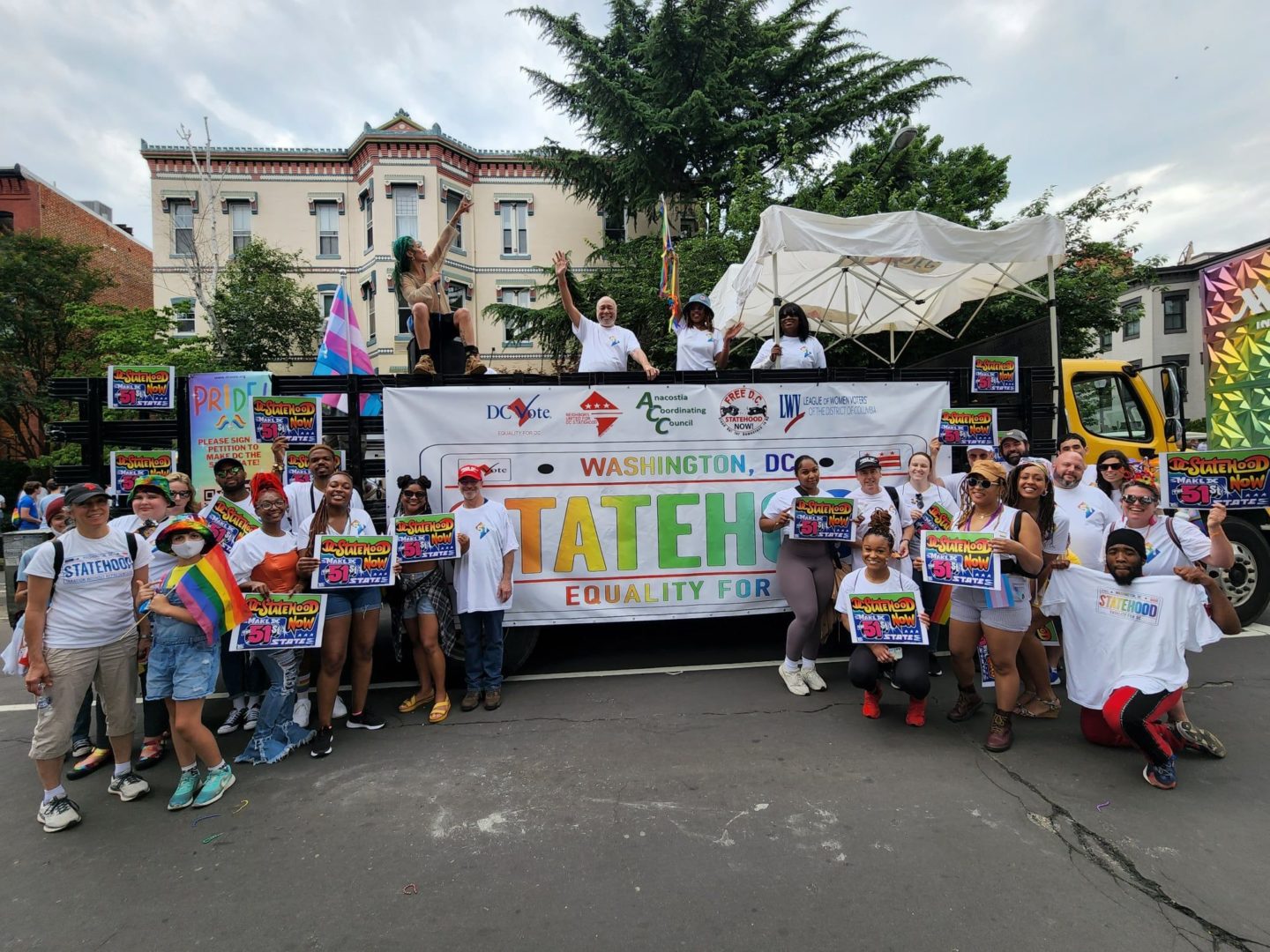
THE BASIC SITUATION
For nearly 60 years, DC residents have had a degree of local self-government. But for more than 220 years, the nearly 700,000 residents of Washington, DC have been denied the voting representation in Congress that is the birthright of every American citizen.
DC residents pay federal taxes, serve in the military, and follow all the same national laws as every other American. But we have no representative or senator who votes for us in Congress, and no voice in the national laws that govern our lives.
Statehood is winnable. The bill exists, it has passed the House before, and the path is clear: build enough constituent pressure across the country that members of Congress cannot ignore it, pass HR 51 through both chambers, and get a presidential signature. That is how DC becomes the 51st state.
HOW DO WIN DC STATEHOOD ONCE AND FOR ALL?
Congress passes a bill and the President signs it. That is it.
The bill already exists. It is called the Washington, DC Admission Act (HR 51 / S. 51). It has already passed the full House of Representatives twice. It now needs to pass both chambers in the same Congress and be signed by a President.
House vote. Senate vote. President’s signature. DC becomes the 51st state.
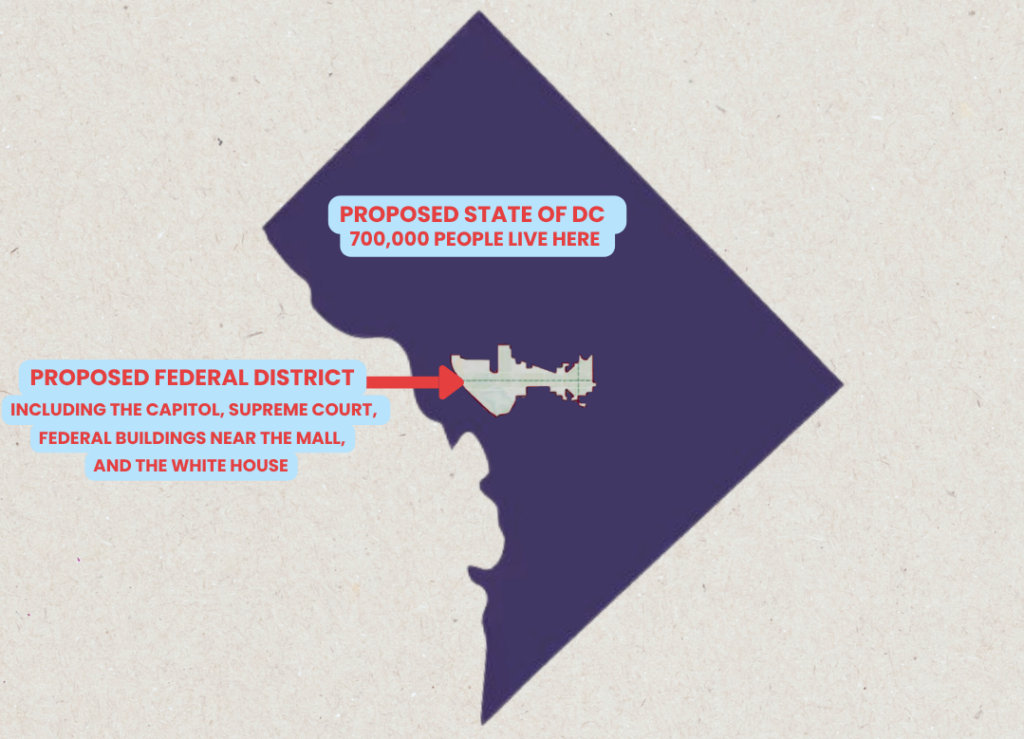
Under the bill, the new state would be called Washington, Douglass Commonwealth. It would consist of the residential and commercial areas of present-day DC. The federal district, which the Constitution limits to a maximum of 10 square miles, would be reduced in size and remain under Congress’ legal authority. It would continue to include the Capitol Complex, the White House, the Supreme Court, principal federal monuments, and the National Mall, and would continue to belong to all Americans.
THE FACTS
- DC has a population larger than Wyoming and Vermont, yet its residents have no voting members in Congress
- Every other state has two senators. DC has none.
- DC residents elect a Delegate to the House of Representatives who can participate in debates but cannot cast a vote
- DC residents pay more federal taxes per capita than any state, and more in total than 20 states. That is taxation without representation.
- DC has sent more soldiers per person to fight in America’s wars than most states
- DC has more people than every single state had when it was admitted to the union
- 86% of DC voters supported statehood in an official referendum election in 2016
- DC’s economy, with a GDP larger than that of 17 states, reflects its readiness for statehood
- The Constitution limits the federal district to a maximum of 10 square miles. The bill proposes reducing it to a smaller footprint covering the seat of government, and letting the area where citizens live and work become a state.
WHY NOW?
Congress has been overriding laws that DC residents voted for and that their elected local government passed. Since August 2025, the federal government has had the National Guard deployed on DC streets, without the consent of DC’s local leadership. DC residents have no voting voice in Congress to push back. The only permanent fix is representation.
HOW DO WE WIN?
DC has no vote in Congress, so the pressure has to come from people who do. Members of Congress respond to their own constituents. A senator from Ohio is not thinking about DC statehood unless the people back home are raising it.
Beyond casting votes, members of Congress provide constituent services, help residents navigate federal agencies, and carry the concerns of their communities into every legislative negotiation. DC residents have no member of Congress doing that work on their behalf. Statehood changes that.
The strategy is constituent pressure at scale. DC residents building networks outside DC and turning those connections into people willing to contact their representatives when it counts. The broader the coalition, the more members of Congress feel it from their own districts.
Winning requires passing HR 51 through both chambers and getting a presidential signature. Every cosponsor added, every member moved, every constituent call made builds toward that.