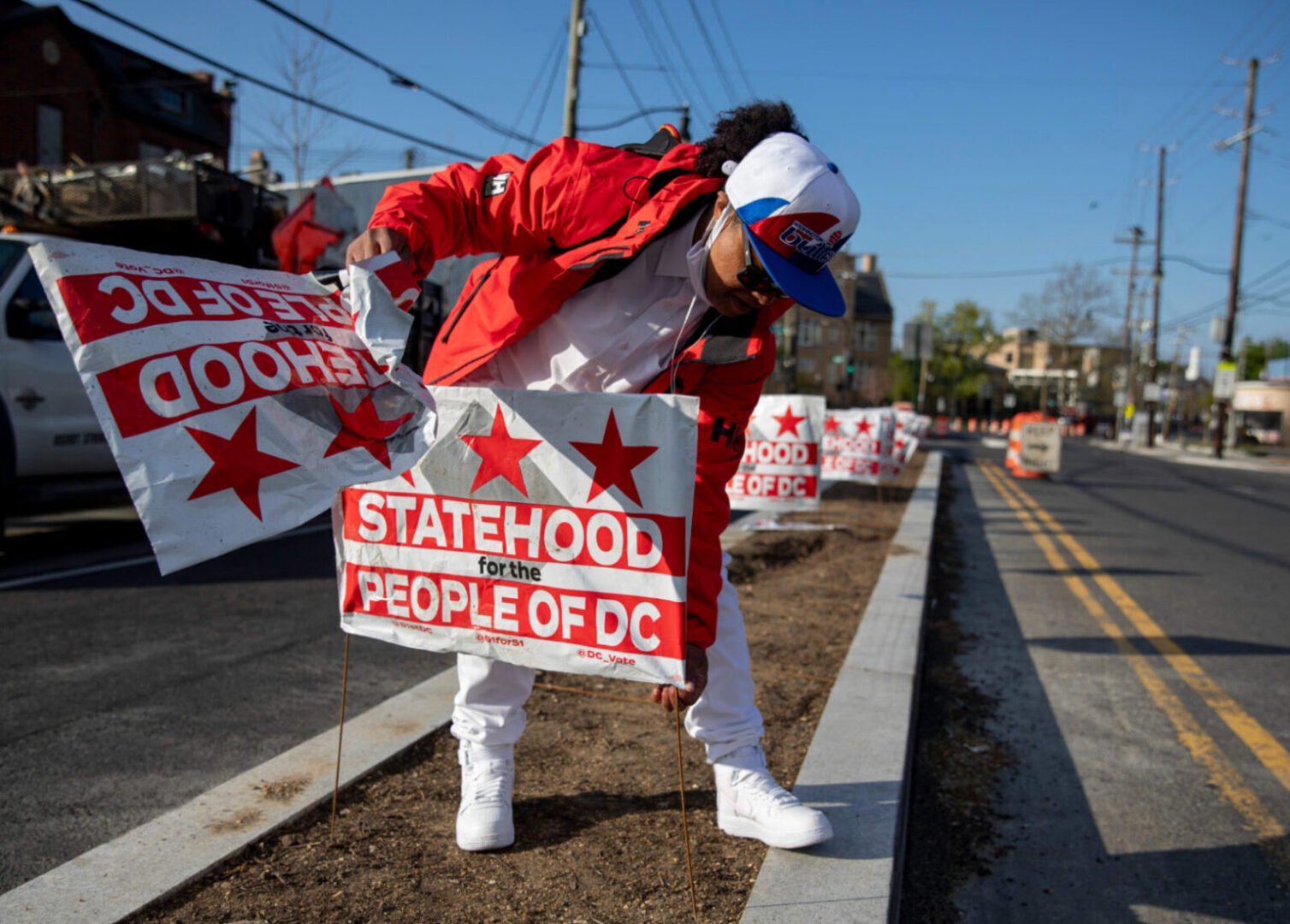
Where the Fight Stands – Amy Vruno, DC Vote Executive Director
I’ve been in this role for about nine months now. Here’s what I’ve learned.
DC statehood is winnable, and we are building toward 2029 as the window when it happens. Getting there requires using the years in between well, not waiting for the moment to arrive on its own.
I came into this job during one of the hardest stretches for DC’s authority over itself in recent history. Since August 2025, National Guard troops have had an active presence in the nation’s capital, deployed onto DC’s own streets without DC’s consent, and DC residents have had no legal authority to stop it. The President has said publicly that he might take over DC’s local government if he dislikes the outcome of a local election, a threat DC’s own leaders cannot afford to treat as idle, because under DC’s current legal status, that threat is real. In February, Congress reversed a District tax decision for the first time ever, a decoupling law DC’s own Council had passed to protect roughly $600 million in local revenue, and DC’s tax filing system was down for months as a result. It was the second year in a row Congress used its control over DC’s budget to manufacture a fiscal crisis. The year before, routine budget language got stripped from a federal spending bill and blew a hole in DC’s active budget overnight.
None of that is abstract to the people who live here. It is what home rule without statehood actually looks like when the political wind shifts.
Here is what I’ve come to believe, watching all of this up close: these attacks are not just crises we have to manage. They are also making the case for statehood more visible to people outside DC than it has been in years. Every time Congress or the White House reaches in to overrule a decision DC residents already made through their own elected government, more people outside DC start asking why that’s allowed to happen at all. The Supreme Court’s ruling this year narrowing part of the Voting Rights Act added to that same national conversation about who actually gets a full voice in their own government. DC’s situation is not separate from that conversation. It has always been part of it.
But visibility alone does not get us to 2029. The risk in a moment like this is not that people stop paying attention. It’s that attention turns into activity without strategy: a lot of organizations who support statehood in principle, without the shared focus that actually moves anything. DC Vote exists to hold one focus that almost nobody else in this space is built to hold: what it actually takes to build lasting support for DC statehood, year over year, until the window opens.
Concretely, that means three things. It means clearly explaining what full representation would actually change for the 700,000 Americans living without it. It means reaching people outside DC who have never had a reason to think about DC’s status before, because a movement made only of DC residents can only go so far. And it means connecting the case for statehood to what those people already care about: the same federal overreach hitting DC this year is part of the same broader story about who gets a full voice in their own government.
If you take one thing from my first nine months here, take this: there are more people outside DC ready to make this their fight than most of us assumed even a year ago, and growing that circle is what I’m building toward 2029. It’s work every person reading this can be part of.