It is one of the most common objections to DC statehood, and it does not hold up against the numbers.
DC has a population larger than Wyoming and larger than Vermont, both of which have two senators and a voting member of the House. Nobody questions whether Wyoming or Vermont belongs in the union. Size was never the test.
Here is the part that surprises most people: DC has more residents than every single state had at the moment it was admitted to the union. California, the next closest comparison, had only about 92,000 residents when it became a state in 1850. Nevada had just 21,000 residents when it was admitted in 1864. DC’s population today is nearly 700,000, and that number has never been a requirement for statehood at any point in American history.
The “too small” argument treats population as if it were a constitutional threshold. It is not. The Constitution sets no minimum population for statehood. Congress has admitted states with a few thousand residents and states with millions, using the same simple process every time: a vote in both chambers, a presidential signature.
What DC actually has, beyond population, is an economy with a larger GDP than 17 states. It has residents who pay more in federal taxes per capita than any state in the country, and more in total federal taxes than 20 states combined. It has sent more soldiers per person to fight in America’s wars than most states. By every practical measure that statehood has ever depended on, DC qualifies.
The size argument is not really about size. It is a stand-in for a different, more honest question: should DC get two senators. That is a fair question to debate. But it should be debated on its own terms, not disguised as a concern about population, because the population numbers simply do not support it.
View our latest job openings below and click the links to learn more and apply.
NATIONAL ADVOCACY DIRECTOR
The National Advocacy Director will drive DC Vote’s work with national partners and on Capitol Hill. This person will convene allies, coordinate and participate in coalitions, along with participating at coalition tables. They will lead Hill meetings alongside allies, and shape strategy to build support among key officials and move them to act in support of DC statehood. This person will work in coordination with the DC Vote Statehood Field Director, communications team, strategic advisors and DC-based and national allies.
Full voting rights and statehood for the 700,000 residents of DC cannot be won without building alliances, support, and power outside of DC. The DC Statehood Field Director will develop and execute a strategy to grow visibility, support, action, and power for DC statehood in approximately 7-10 key states.
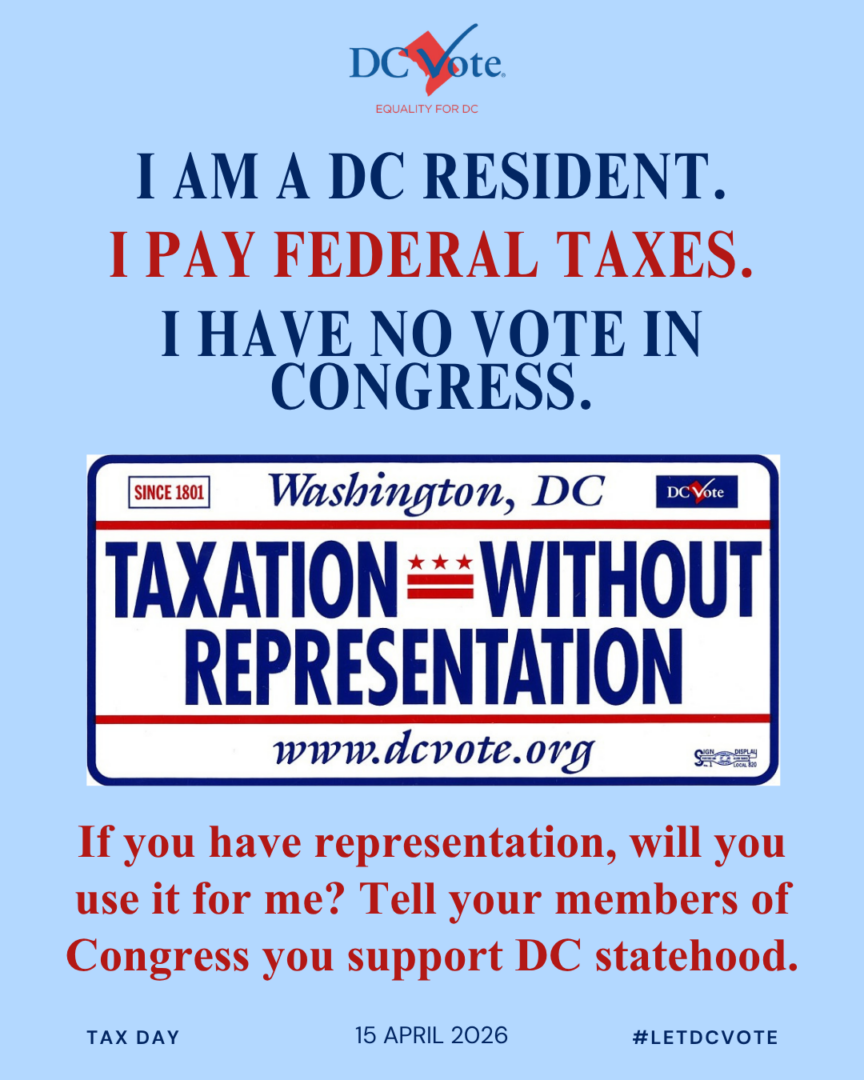
The ask: On Tax Day, post to remind your networks that DC residents pay full federal taxes with zero voting representation in Congress.
Tax Day is one of the most powerful moments to make the case for DC statehood. Every American feels the weight of tax season, and it’s the perfect time to remind your networks that 700,000 DC residents pay full federal taxes with zero voting representation in return. This toolkit gives you everything you need to post on April 15.
What to do:
Copy one of the posts below (or write your own using the talking points)
Add the graphic from DC Vote
Post on April 15 and tag @DCVote
Encourage friends and family to share
Suggested post copy
Short (Twitter/X/BlueSky): I’m filing my federal taxes but as a citizen of DC I face #taxationwithoutrepresentation. DC is not a state so the 700,000 people who live here have no voting representation in Congress. Will you stand with me and demand #DCstatehood now. #LetDCVote #TaxDay
Long (Facebook/LinkedIn/Instagram): I’m a DC resident. Every April I pay full federal income taxes and payroll taxes. Because DC is not yet a state, I have no say in how any of it gets spent. No voting senator. No voting representative in the House. Congress can override our locally passed laws and veto our budget, and we have no recourse through the ballot box. The founders called this taxation without representation. It’s still happening. Will you stand with me to support DC statehood: H.R. 51 / S. 51. #LetDCVote #DCStatehood #TaxDay #DCVote
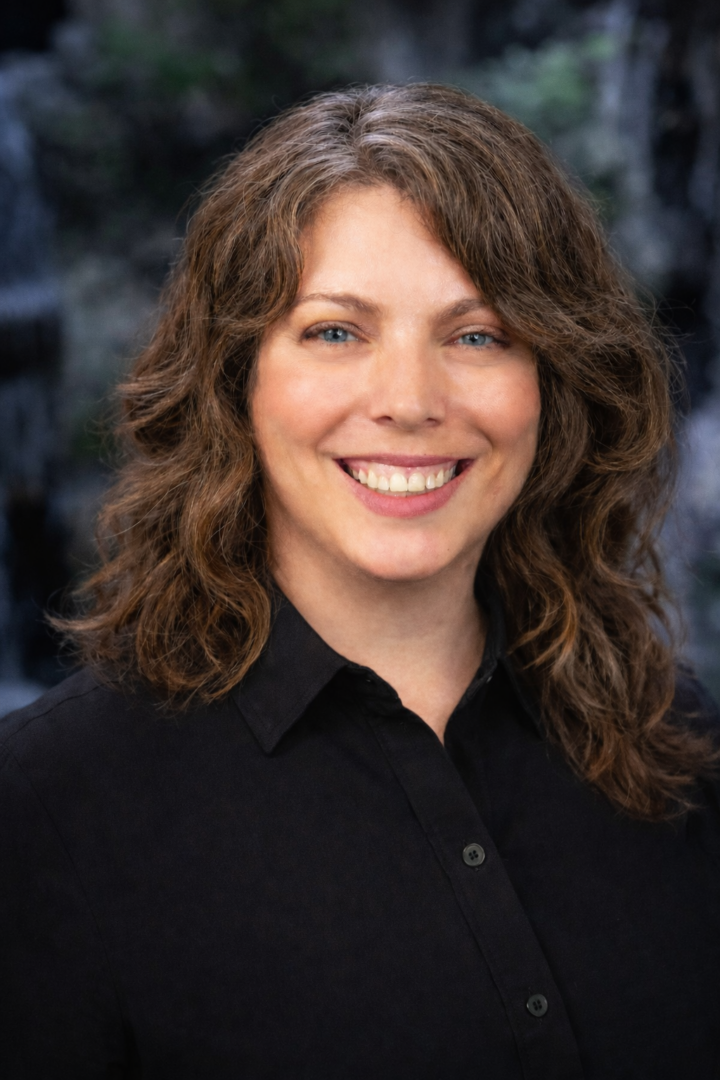
Amy Vruno is a nationally respected organizer, coalition builder, and executive leader with more than 20 years of experience building powerful coalitions, leading winning policy campaigns and advancing strategies that strengthen communities and our democracy. She brings the strategic discipline, fundraising strength and deep DC roots needed to defend and advance the rights of the 700,000+ people who call Washington, DC home at a critical moment for American democracy.
Amy has spent her career leading complex, multi-issue campaigns that expand access to participation in civic and economic life and deliver material results for working people. As Executive Director of the Washington Interfaith Network and previously as a Supervising Organizer with the Metro Industrial Areas Foundation, she directed and developed large-scale organizing efforts across housing, climate, transit, utilities, family sustaining jobs and economic justice issues. Under her leadership, coalitions secured more than $500 million annually in dedicated public transit funding across DC, Maryland and Virginia without concessions that harmed frontline workers; advanced a pipeline of more than 3,000 affordable homes; helped move 1,700 residents from homelessness into permanent housing; and won passage of the Healthy Homes Act to electrify 30,000 low- and moderate-income homes.
Her work has consistently bridged faith, labor and community institutions, building durable civic infrastructure capable of moving both government and corporate decision-makers, and expanding who has a voice in the decisions that shape their lives.
Amy operates fluently at both the grassroots and national levels. Across work in labor, climate, community and philanthropy, she has built on-the-ground capacity in nearly every state in the nation. As a Program Officer with Invest in Our Future, she managed a $41+ million national grantmaking portfolio supporting community power-building and clean energy implementation. She also played a lead role in a national capacity-building initiative supporting communities seeking nearly $2 billion in federal funding for projects addressing climate justice, pollution reduction and climate resilience, reaching more than 1,100 applicant communities, including local governments, institutions of higher education and federally recognized tribes across 49 U.S. states and most U.S. territories.
Through her capacity-building leadership, she has supported the Amalgamated Transit Union International across more than 20 U.S. states and several Canadian provinces, and trained and developed organizers and leaders in several states through the Industrial Areas Foundation. She has collaborated with networks including Community Change and Just Power Alliance to align institutional strategy and grassroots organizing to expand democratic participation and community power.
In addition to her organizing leadership, Amy brings deep executive experience. She has raised funds through dues, grassroots campaigns, major donors, foundations and contracts for more than 15 years; built and supervised high-performing staff teams; partnered closely with boards; overseen budgeting and strategic planning; and led organizational change processes during periods of growth and transition. She is both a movement-rooted leader and a disciplined institutional executive.
Amy holds a Juris Doctor from Columbia Law School and a B.A. in Sociology from the University of Minnesota, where she graduated summa cum laude. She is also certified in Leadership Coaching through Georgetown University.
At a time when struggles over who counts as a full participant in American democracy continue to shape our national life, Amy believes the fight for DC statehood is inseparable from broader efforts to defend and expand voting rights, civic participation and democratic legitimacy across the United States. The struggle for the enfranchisement of DC residents is part of a larger American tradition: each generation working to overcome barriers along the road to full representation and expanding the promise of democracy.
As Executive Director of DC Vote, Amy is focused on building the durable civic and political power necessary to secure full representation and self-determination for the people of Washington, DC, and to ensure that when the next federal opportunity emerges, the movement is strong, focused and ready to win.